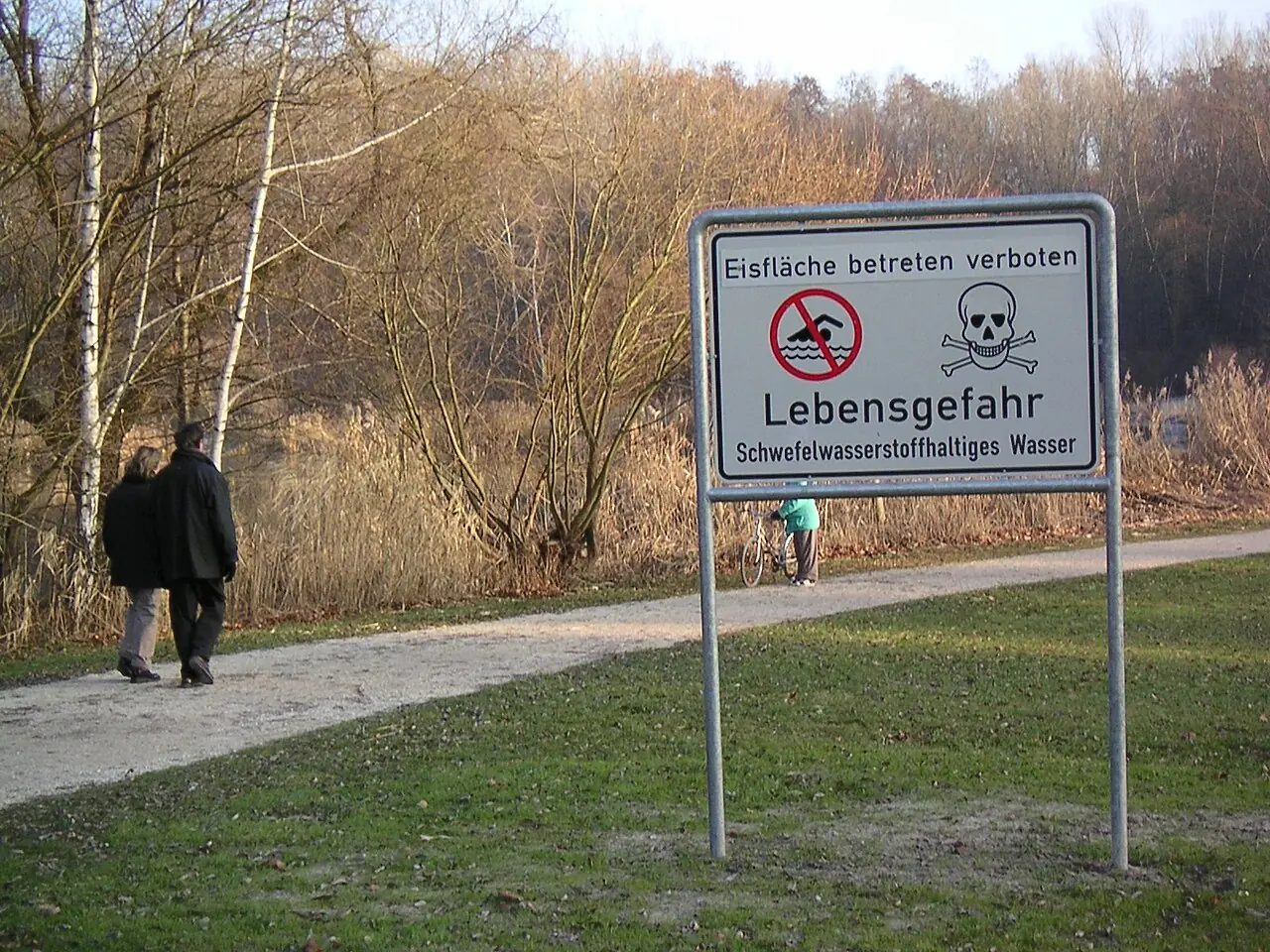

Most of the dangers a gas rescue team faces cannot be seen, and many cannot be smelled. This page gives the basic properties of the gases rescuers meet most often, with the reference values used in different countries and links to the official sources.
Three kinds of hazard
A gas can harm people in three different ways, and many gases do more than one.
- Toxic gases poison the body even in small amounts. Hydrogen sulfide, carbon monoxide, chlorine and hydrogen cyanide can kill at concentrations of a few hundred parts per million (ppm) or less, far below the level at which they would displace any noticeable amount of oxygen.
- Asphyxiant gases take away the oxygen the body needs. Simple asphyxiants such as nitrogen, argon, methane or carbon dioxide displace air; oxygen deficiency gives no warning and can cause collapse within a few breaths. Carbon monoxide and hydrogen cyanide are called chemical asphyxiants because they stop the body from using the oxygen it breathes. See also oxygen deficiency.
- Flammable gases burn or explode when their concentration in air lies between the lower and upper explosive limits (LEL and UEL). A mixture above the UEL is not safe: as soon as it is diluted with air, it passes through the flammable range again.
Where gas collects
The relative density of a gas (air = 1) tells you where to look for it. Gases heavier than air, such as hydrogen sulfide, carbon dioxide, chlorine and sulfur dioxide, flow downhill and collect in pits, cellars, trenches, manholes and the bottom of tanks. Lighter gases such as methane and ammonia rise and gather under roofs and in the upper parts of shafts. Gases close to the density of air, such as carbon monoxide, mix with air and spread through the whole space.
Density is only a guide. A cold release (for example liquefied ammonia or a gas escaping through an expansion valve) can be heavier than air at first, a hot gas from a fire rises, and draughts and ventilation move everything. This is why the atmosphere is measured at several heights before entry and continuously during the work.
Common gases at a glance
Values are from the NIOSH Pocket Guide to Chemical Hazards unless stated otherwise. NIOSH REL is the US recommended exposure limit: TWA is a 10-hour time-weighted average, ST a 15-minute short-term limit, C a ceiling value. IDLH means immediately dangerous to life or health.
| Gas | Density (air = 1) | LEL–UEL, % vol | NIOSH REL | IDLH | Notes |
|---|---|---|---|---|---|
| Hydrogen sulfide H₂S | 1.19 | 4.0–44 | C 10 ppm (10 min) | 100 ppm | Rotten eggs at low levels, but deadens the sense of smell; sewers, oil and gas, tanneries, biogas |
| Carbon monoxide CO | 0.97 | 12.5–74 | TWA 35 ppm, C 200 ppm | 1200 ppm | Odourless; fires, engines, furnaces, blast-furnace gas, afterdamp |
| Methane CH₄ | 0.55 | LEL 4.4 (IEC); 5–15 (ICSC) | — | — | Odourless (natural gas is odorised); coal mines, sewers, landfill, biogas |
| Ammonia NH₃ | 0.60 | 15–28 | TWA 25 ppm, ST 35 ppm | 300 ppm | Pungent; refrigeration plants, fertiliser production, agriculture |
| Chlorine Cl₂ | 2.47 | not flammable | C 0.5 ppm (15 min) | 10 ppm | Greenish-yellow, pungent; strong oxidiser; water treatment, chemical plants |
| Carbon dioxide CO₂ | 1.53 | not flammable | TWA 5000 ppm, ST 30 000 ppm | 40 000 ppm | Odourless; fermentation cellars, silos, wells, fire suppression systems |
| Sulfur dioxide SO₂ | 2.26 | not flammable | TWA 2 ppm, ST 5 ppm | 100 ppm | Pungent, irritating; smelters, combustion of sulfur-containing fuel |
| Nitrogen dioxide NO₂ | ≈ 1.6 | not flammable | ST 1 ppm | 13 ppm | Reddish-brown, acrid; blasting fumes, silos, nitric acid; lung damage can appear hours later |
| Hydrogen cyanide HCN | 0.94 | 5.6–40 | ST 4.7 ppm (skin) | 50 ppm | Bitter almonds, which many people cannot smell; fires involving plastics, electroplating, fumigation |
| Oxygen deficiency | — | — | — | below 19.5 % O₂ (OSHA) | Normal air contains 20.9 % O₂; caused by inert gases, CO₂, rusting, fermentation, purging |
Densities for methane, nitrogen dioxide and hydrogen cyanide are calculated from molar masses; the methane limits come from the ILO International Chemical Safety Card (5–15 %) and from IEC 60079-20-1 (LEL 4.4 %), explained below. Methane has no NIOSH REL or IDLH: the danger is explosion and oxygen displacement, not toxicity.
Limits differ by country
Occupational exposure limits are set nationally and are not the same everywhere. The table compares the European Union indicative values (IOELV), the US legal limits of OSHA and the Russian maximum permissible concentrations in the air of the working area.
| Gas | EU IOELV, 8 h | EU IOELV, 15 min | US OSHA PEL | Russia, mg/m³ |
|---|---|---|---|---|
| H₂S | 5 ppm | 10 ppm | C 20 ppm | 10 (3 with C1–C5 hydrocarbons) |
| CO | 20 ppm | 100 ppm | TWA 50 ppm | 20 |
| CH₄ | — | — | — | 7000 |
| NH₃ | 20 ppm | 50 ppm | TWA 50 ppm | 20 |
| Cl₂ | — | 0.5 ppm | C 1 ppm | 1 |
| CO₂ | 5000 ppm | — | TWA 5000 ppm | 27 000 / 9000 |
| SO₂ | 0.5 ppm | 1 ppm | TWA 5 ppm | 10 |
| NO₂ | 0.5 ppm | 1 ppm | C 5 ppm | 2 |
| HCN | 0.9 ppm | 4.5 ppm | TWA 10 ppm | 0.3 |
Sources: EU Directives 2000/39/EC (ammonia), 2006/15/EC (chlorine, carbon dioxide), 2009/161/EU (hydrogen sulfide) and (EU) 2017/164 (carbon monoxide, sulfur dioxide, nitrogen dioxide, hydrogen cyanide); OSHA values from the NIOSH Pocket Guide; Russian values from table 2.1 of SanPiN 1.2.3685-21. A single Russian value is the maximum single concentration; where two are given, the first is the maximum and the second the shift average. For carbon monoxide the Russian rules allow short work at higher concentrations: up to 50 mg/m³ for one hour, 100 mg/m³ for 30 minutes and 200 mg/m³ for 15 minutes.
Note the units: EU and US limits are given in ppm, Russian ones in mg/m³. At 20 °C, mg/m³ ≈ ppm × molar mass ÷ 24.1; for hydrogen sulfide 10 mg/m³ is about 7 ppm. IOELVs are reference values: each member state sets its own national limits taking them into account, so national lists can differ.
Methane: 4.4 % or 5 %?
For decades the lower explosive limit of methane was quoted as 5 % by volume, and this figure is still used in US mining literature and in many US documents. The European approach, based on IEC 60079-20-1 (since 2017 replaced by ISO/IEC 80079-20-1), determines the limit under different test conditions and gives a lower value: 4.4 %. Neither value is "wrong" — they come from different test methods — but they matter for gas detectors. An instrument calibrated so that 100 % LEL equals 4.4 % methane reads about one seventh higher than one calibrated to 5 % in the same atmosphere: 1 % methane shows as about 23 % LEL instead of 20 % LEL. Rescuers must know which basis their own detectors use, especially when working alongside teams from other countries.
Oxygen: deficiency and enrichment
Dry air contains 20.9 % oxygen by volume. Thresholds for action differ:
- USA: below 19.5 % is oxygen-deficient and above 23.5 % oxygen-enriched under 29 CFR 1910.146; under 29 CFR 1910.134 all oxygen-deficient atmospheres are treated as IDLH.
- Germany: filtering respirators must not be used below 17 % oxygen (below 19 % for carbon monoxide filters), and work in containers and confined spaces below 17 % requires isolating apparatus (DGUV Regel 112-190).
- Russia: work where the oxygen content is below 20 % counts as gas-hazardous work, and work inside vessels without respiratory protection is permitted only with at least 20 % oxygen and no contaminant above its limit (Rostekhnadzor rules for gas-hazardous, hot and repair work, order No. 528 of 15.12.2020).
Enrichment is dangerous too: above roughly 23 % oxygen, clothing, oil and grease ignite easily and burn fiercely. Never "freshen" a space with oxygen.
Sources
- NIOSH Pocket Guide to Chemical Hazards — REL, OSHA PEL, IDLH, explosive limits and densities
- ILO International Chemical Safety Card 0291 — methane
- Directive (EU) 2017/164, Directive 2009/161/EU, Directive 2006/15/EC, Directive 2000/39/EC — EU indicative limit values
- SanPiN 1.2.3685-21 — Russian hygiene standards, table 2.1
- OSHA 29 CFR 1910.146 and 29 CFR 1910.134
- DGUV Regel 112-190 — use of respiratory protective devices
- IEC 60079-20-1 (withdrawn, replaced by ISO/IEC 80079-20-1:2017)
See also equipment, safety and choosing a gas detector.